The Benidorm Cross Walk
From Levante to The Summit
The walk begins where Playa de Levante ends — at the foot of the headland where the beach curves around and the skyscrapers thin out a little.
Keep moving along Avenida de Madrid until the junction becomes clear and you pick out the sign for Calle Alcalde Manuel Catalán Chana.
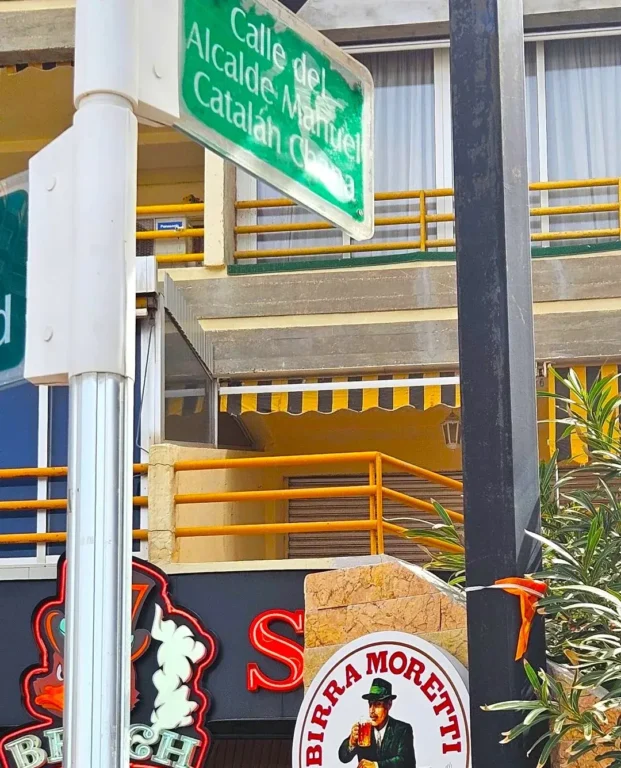
Calle Alcalde Manuel Catalán Chana
The street name, admittedly, is something of a mouthful — it honours a former mayor of Benidorm — but it is one of the most rewarding roads in the entire resort.
STAGE 1
Calle Alcalde Manuel Catalán Chana — The Gateway Street
Walk up Calle Alcalde Manuel Catalán Chana, just by the Wild Duck Beach bar, climbing gently eastward, skirting the base of the headland.
Almost immediately, the relentless noise and density of Benidorm’s new town begins to fall away.
Residential apartment complexes and hotels — among them the striking Gemelos 28, one of Europe’s tallest residential buildings and Hotel Benikaktus — line both sides of the road, while to your right, through gaps between the buildings, the Mediterranean glistens.
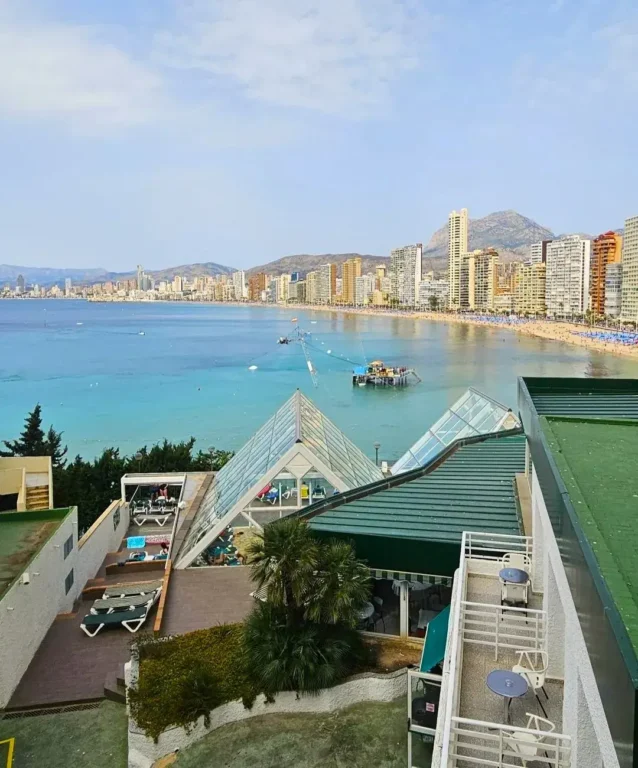
View from Hotel Benikaktus
Continue along this road, keeping the sea to your right.
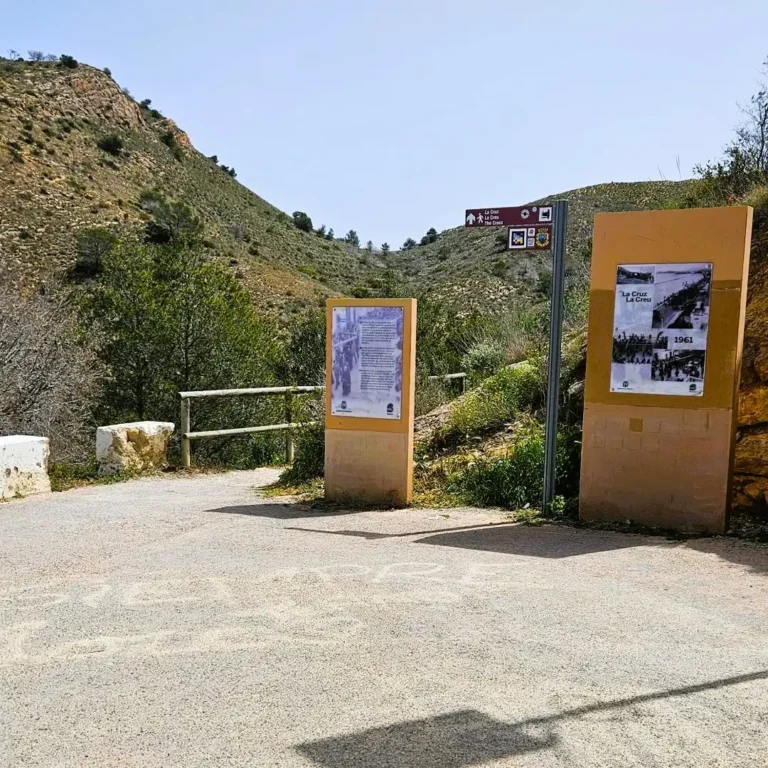
And also keep an eye out for the occasional signpost directing you upwards in the direction of the Benidorm Cross.
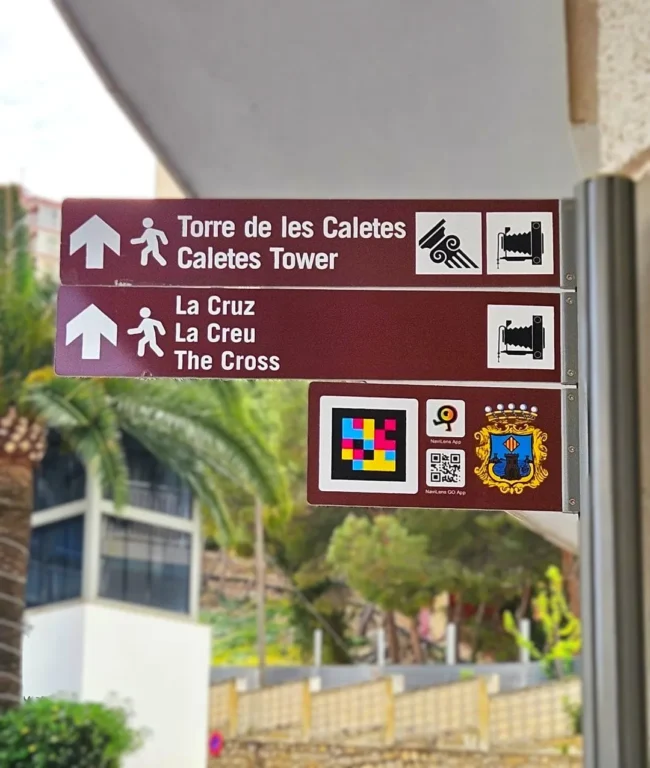
Signposting the way to La Cruz
As you keep walking you will pass Resturante Bahia Blanca on you right, just as you are about to spin around the bend, with the Mediterranean in full view and the Punta Llisera vantage point offering the perfect spot for a photo.
Keep following the curve of the road as it rounds the point. The horizon begins to expand. Ahead and above you, the terracotta-coloured escarpments of the Serra Helada Natural Park rear upwards in a series of dramatic limestone ridges.
While again to your right, barely visible from the road but a lovely detour if your legs are fresh, the pebbly cove of Cala de la Almadraba — one of Benidorm’s hidden coves where bathing suits are optional!
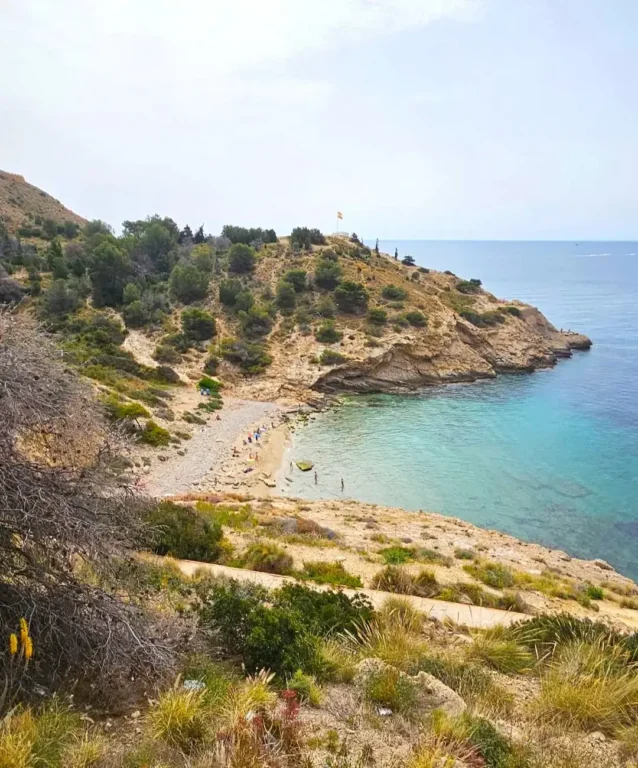
Cala Almadraba – to wear or not to wear your swimwear!
Keep on moving up until you get to the intersection with Calle Sierra Dorada where a hairpin bend will have you doing a full 180 turn as the incline becomes a little steeper.
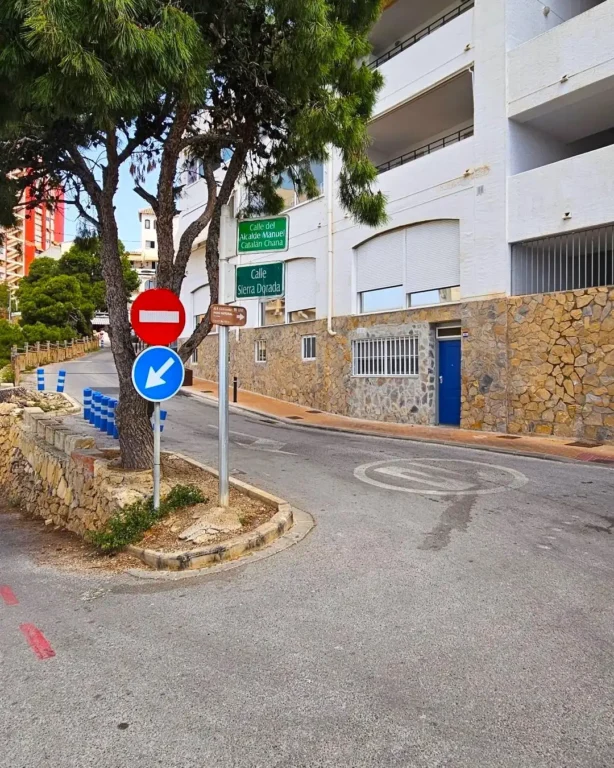
Sierra Dorada Hairpin Bend
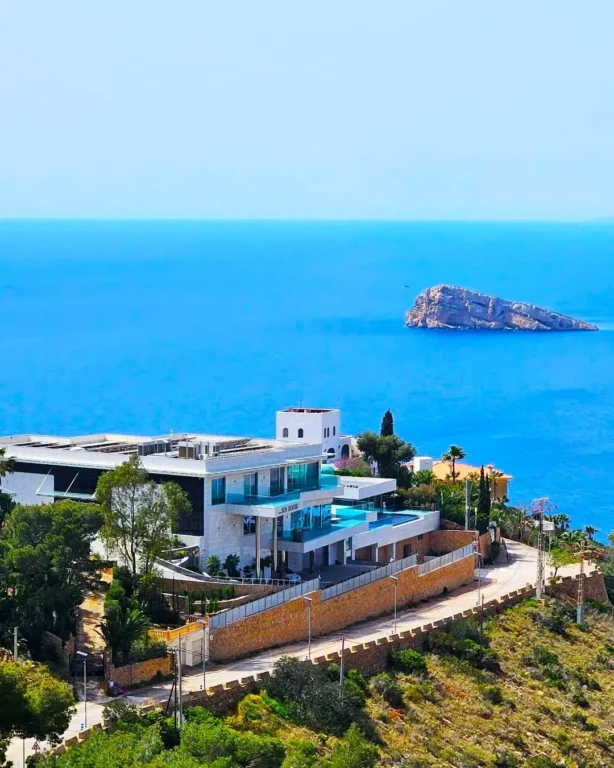
You might want to spend a few minutes, however, by going straight on along Calle Sierra Dorada which will take you to the famous Mirador Benidorm, a place for endless photographs of the Flag, the Sea and the Isle.
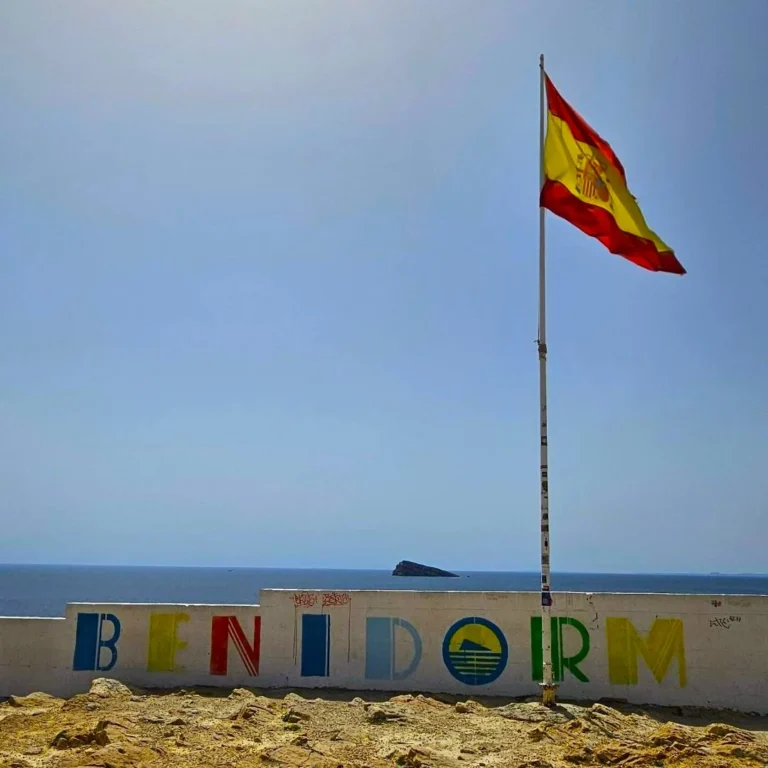
Mirador Benidorm, the perfect photo op
Alternatively continue around the hairpin up the steep bank, still on Sierra Dorada, and head for a welcome pitstop.
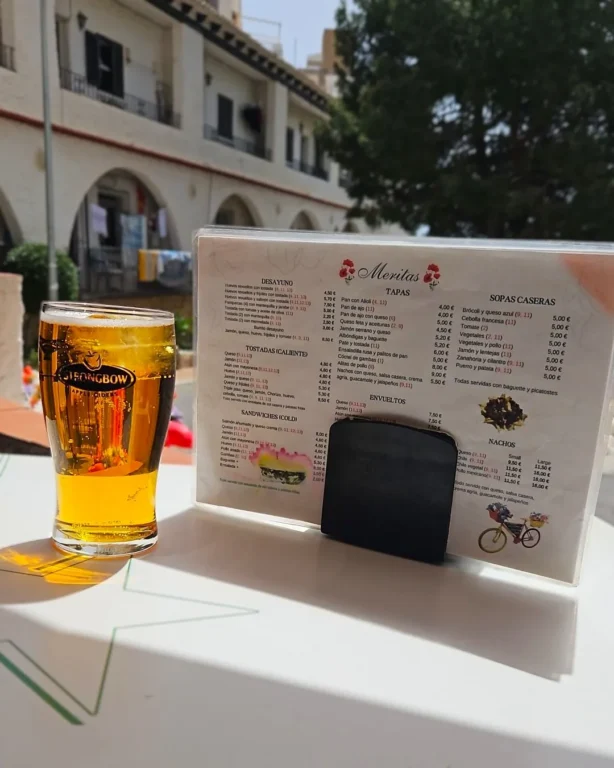
In a couple of hundred metres you will come face to face with Bar Meritas.
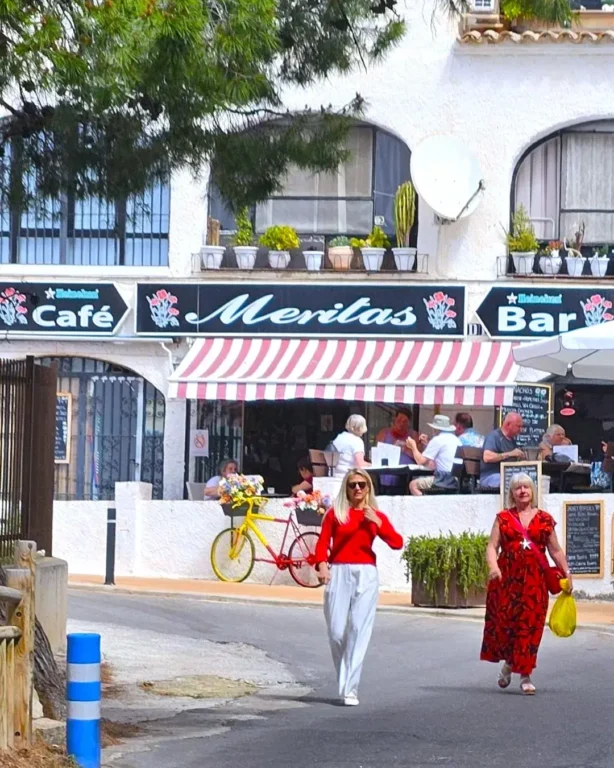
Sanctuary at Café Bar Meritas
You may want to save Meritas for the return leg, where you can enjoy much deserved refreshments as well as a lovely lunch.
So a good idea might be to reserve yourself a table for when you are coming back on the downhill stint.
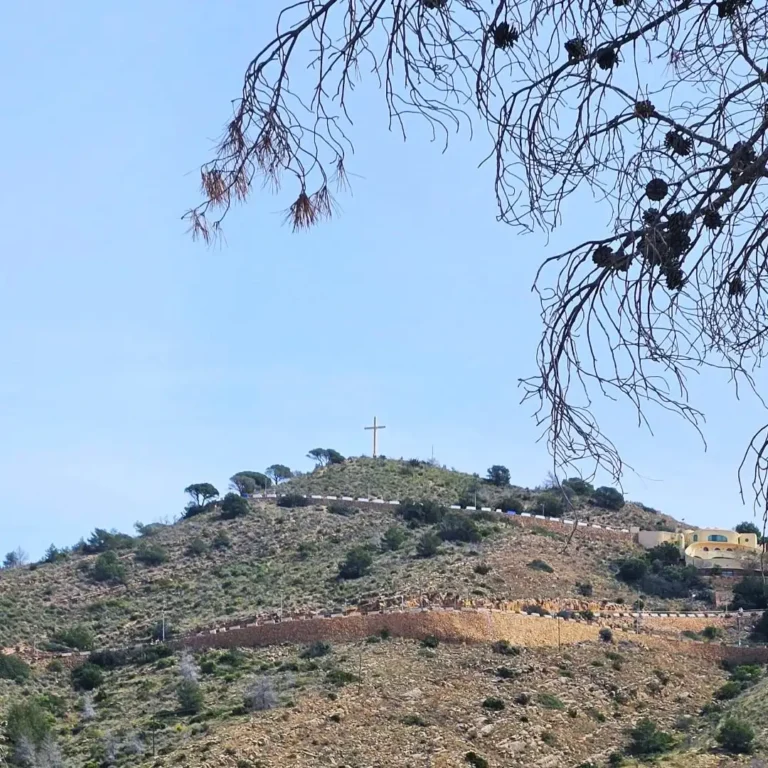
Continuing after Meritas, Sierra Dorada soon splits into two at the junction, where you will veer right and again slowly climb as you inch closer to Benidorm Cross – and don’t forget to look out for those signs pointing you in the right direction.
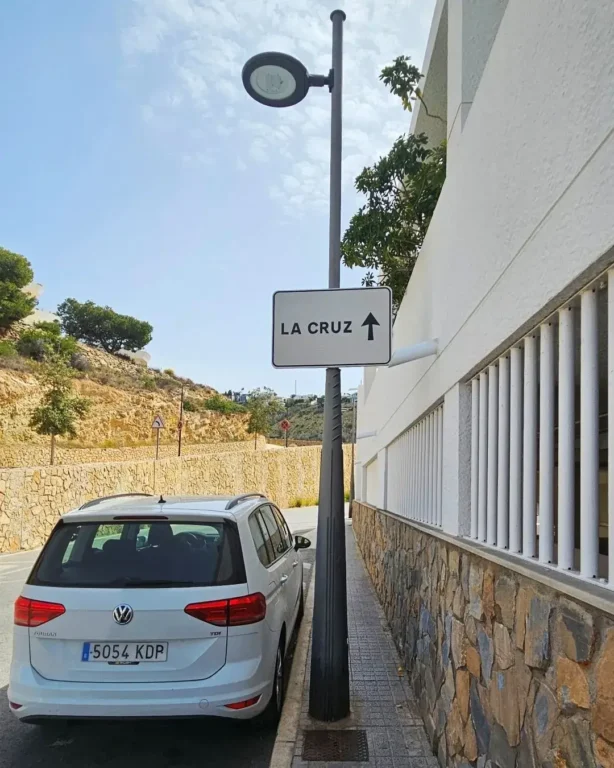
Follow that Sign!
STAGE 2
The Ascent — Entering Sierra Helada
This is the moment the walk genuinely transforms; as the smooth, paved lane winds its way through low Mediterranean scrub, mustard-coloured stone and aromatic wild rosemary.
The road follows the contour of the hillside, alternating between open sea views and fragrant stretches of pine woodland. On a clear day — and Benidorm receives more than 300 days of sunshine per year — the visibility is extraordinary.
You can pick out the distinctive limestone plug of the Peñon d’Ifach rising from the coast at Calpe, some 25 kilometres to the north.
The white villages of the Marina Baixa appear draped across the inland mountains.
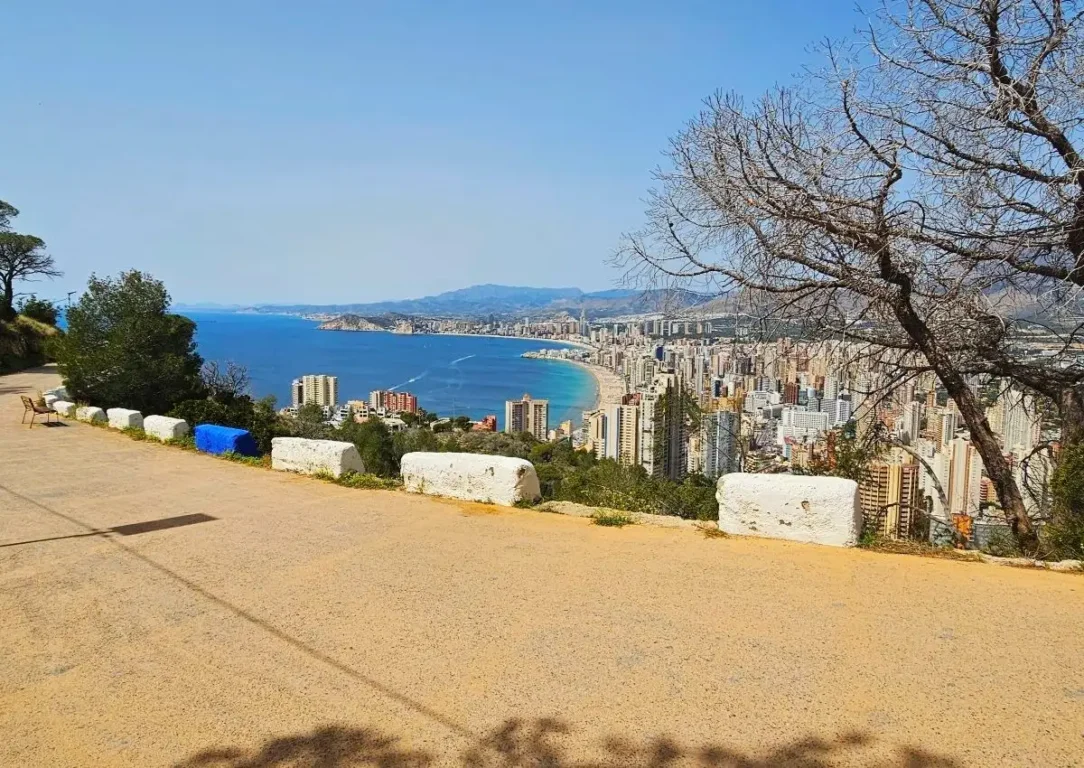
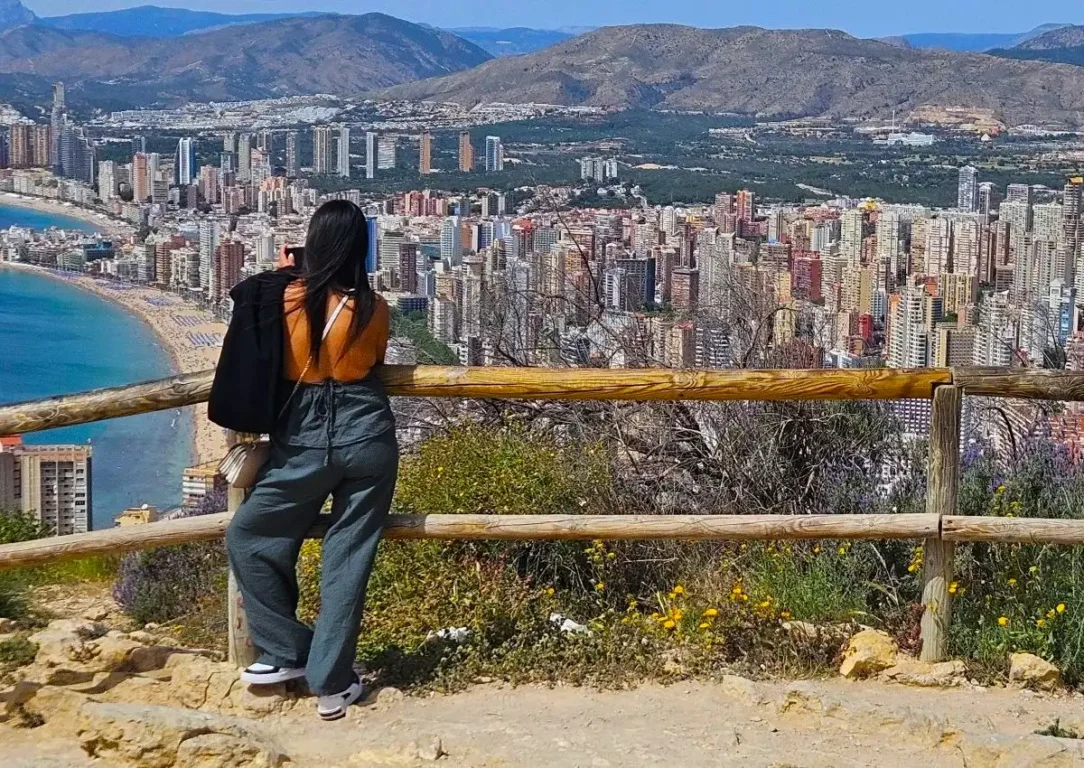
And directly below, the astonishing forest of skyscrapers that makes Benidorm’s skyline unique in all of Europe.
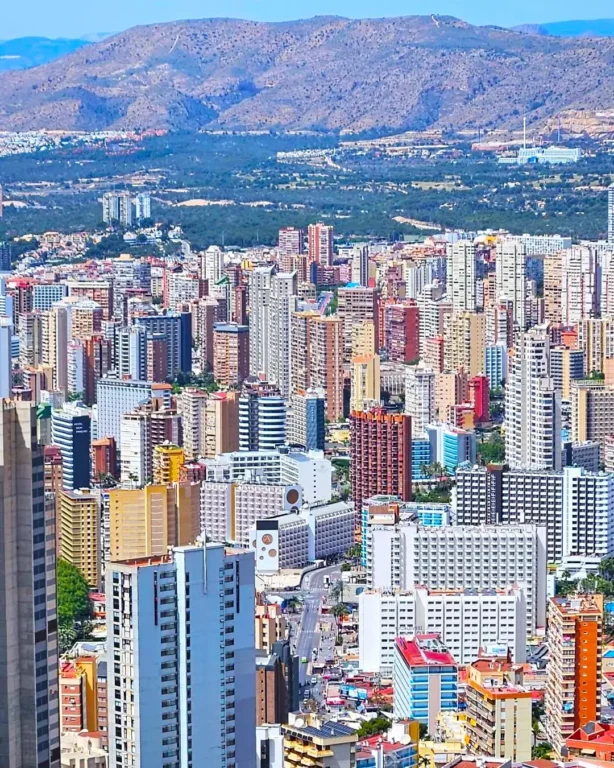
A jigsaw of hotels and apartments
At this stage of the walk, it is worth pausing to appreciate the Sierra Helada’s remarkable ecology. “The Frozen Mountain” — named by fishermen who observed how the cliffs caught the moonlight — is home to diverse Mediterranean flora and provides nesting grounds for Audouin’s gulls, Peregrine falcons and the rare Bonelli’s eagle.
Dolphins and even occasional sperm whales have been recorded in the waters below the cliffs.
After skirting the headland, the route swings inland and begins its more serious work.
The paved road — which here carries the wonderfully incongruous names of Avenida de Tokio and then Calle Taywan, a legacy of Benidorm’s optimistic internationalism during the 1970s development boom — begins to climb in earnest.
The gradient is honest but never brutal.
The road ascends in a series of sweeping bends, each one opening up a more generous panorama than the last.
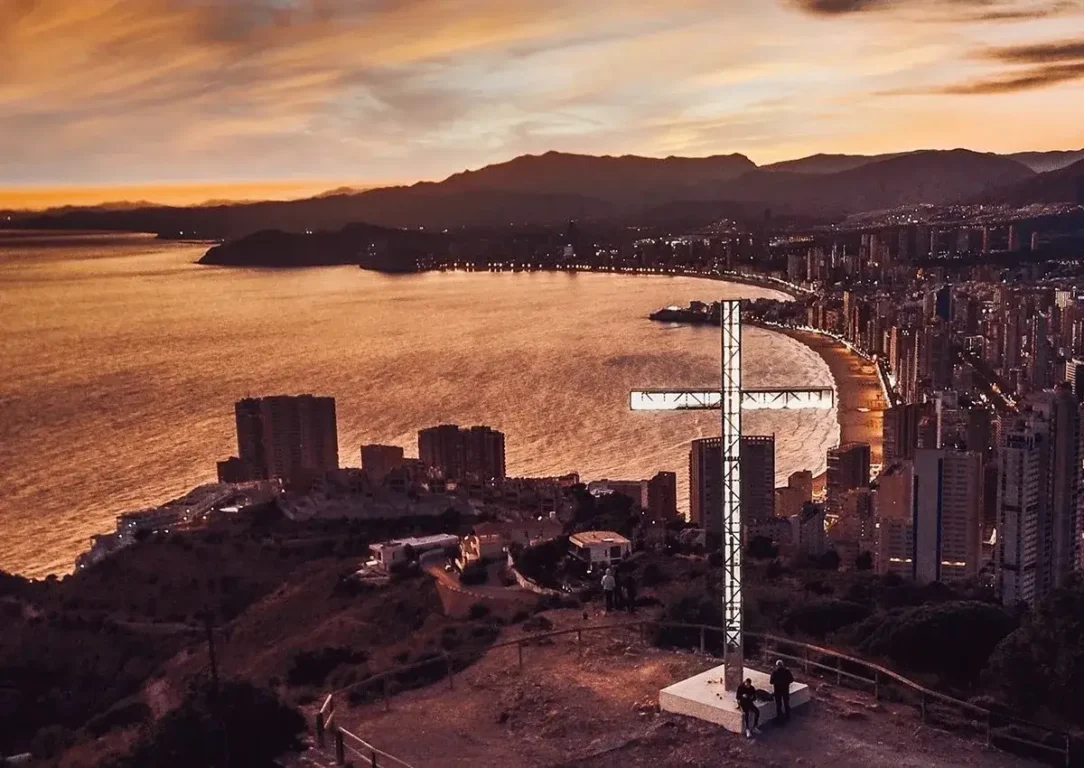
Street lighting has been installed along this section, making an evening ascent perfectly feasible — though we would always recommend the late-afternoon light, when the limestone cliffs glow amber and the sea turns a deep, saturated blue.
As you climb higher, the views over Benidorm Bay become increasingly dramatic.
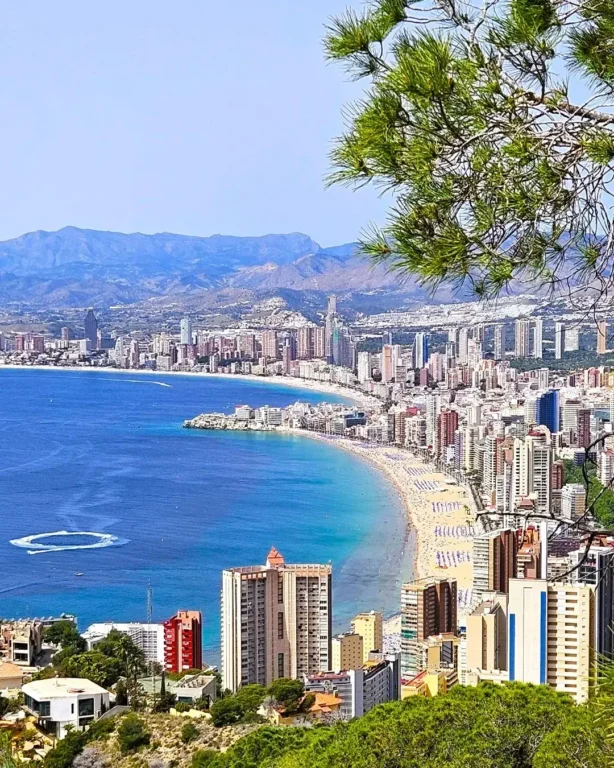
The Bay of Benidorm
The twin beaches of Levante and Poniente fight for prominence in the far distance.
And the compact bulk of the Old Town — its church tower, its terracotta rooftops, its headland jutting into the sea — sits between them like a full stop in a sentence written in sand.
From here, the scale of Benidorm’s ambition becomes fully legible: this is a city that built itself vertically precisely because it understood that the horizontal was too precious to squander.